


Authentic made in Italy clothing is available to UK shoppers and retailers right now — you do not need to navigate luxury department stores or travel to Milan to find it. Lashra curates a collection of Italian-made womenswear that you can order online with free shipping on orders over £50 and a straightforward returns policy. Before you buy, three checks will protect you from imitations:
- Confirm the country-of-origin label sewn into the garment and ask for supplier invoices on wholesale orders.
- Verify named materials on the product page — cashmere, linen, silk or specialist wools such as Loro Piana fabrics are the clearest indicators of genuine Italian manufacture.
- Read the shipping, VAT and returns terms before checkout, particularly for cross-border orders.
Pro Tip: Prioritise brands that name their workshops or mills on product pages. That transparency is a stronger authenticity signal than a single ‘Made in Italy’ stitch label alone.
Table of Contents
- What does Made in Italy womenswear look like in the UK market?
- Why do materials and construction matter so much?
- How should UK buyers approach sizing and fit?
- How can you verify a garment is genuinely Made in Italy?
- What should UK buyers expect to pay, and how does shipping work?
- How do UK retailers source Made in Italy clothing for resale?
- Key takeaways
- Why we curate Made in Italy clothing at Lashra
- Lashra’s Made in Italy collection is ready for you to explore
What does Made in Italy womenswear look like in the UK market?
Italian-made womenswear covers far more ground than couture gowns. The categories you will encounter most often in the UK market are fine knitwear (cashmere and merino), tailored trousers, linen separates, co-ordinated sets, silk blouses and premium outerwear. These are seasonless, timeless pieces built around fabric drape and refined finishes rather than trend-led silhouettes, which makes them easy to mix and match across a wardrobe.
For retail buyers, that versatility is a commercial advantage. Knit staples and tailored trousers sell steadily across seasons without the markdown risk of trend pieces. Co-ords and linen separates photograph well and carry strong perceived value, which supports full-price selling. If you are building a boutique assortment, these categories form a reliable core.
One sizing note worth knowing early: many Italian pieces use continental sizing or ‘one size’ constructions that do not map directly to UK sizes. Always check centimetre measurements rather than relying on the size label — more on this in the sizing section below.
Why do materials and construction matter so much?
The value proposition of quality Italian garments rests on two things: the raw material and what the maker does with it. Master craftsmanship paired with superior fibres creates garments designed to be seasonless and long-lasting — the opposite of disposable fashion.
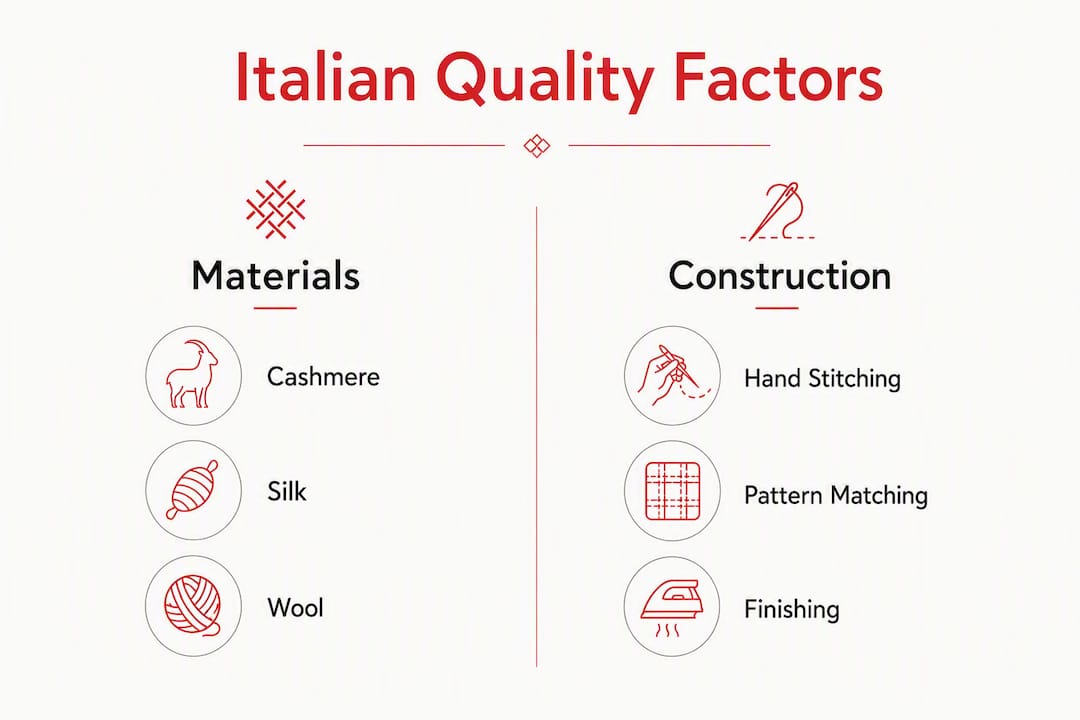
The core materials to look for are cashmere, linen, silk and specialist wools. Each has distinct characteristics that signal Italian manufacturing pedigree:
| Fabric | Typical use | Care note | Why it signals Italian quality |
|---|---|---|---|
| Cashmere | Knitwear, fine jumpers | Hand wash or dry clean | Sourced from specialist mills; expensive to process well |
| Linen | Separates, summer trousers | Cool wash, air dry | Italian linen production is among Europe’s most refined |
| Silk | Blouses, linings, dresses | Dry clean or gentle hand wash | Requires skilled cutting and finishing to drape correctly |
| Specialist wool (e.g. Loro Piana) | Trousers, outerwear, coats | Dry clean | Premium fleece with traceable provenance |
Construction signs are equally telling. Look for even topstitching, hand-finished hems, precise pattern matching at seams and reinforced stress points. Lined garments where appropriate, and internal finishes that are as neat as the outside, indicate a maker who takes the full garment seriously.
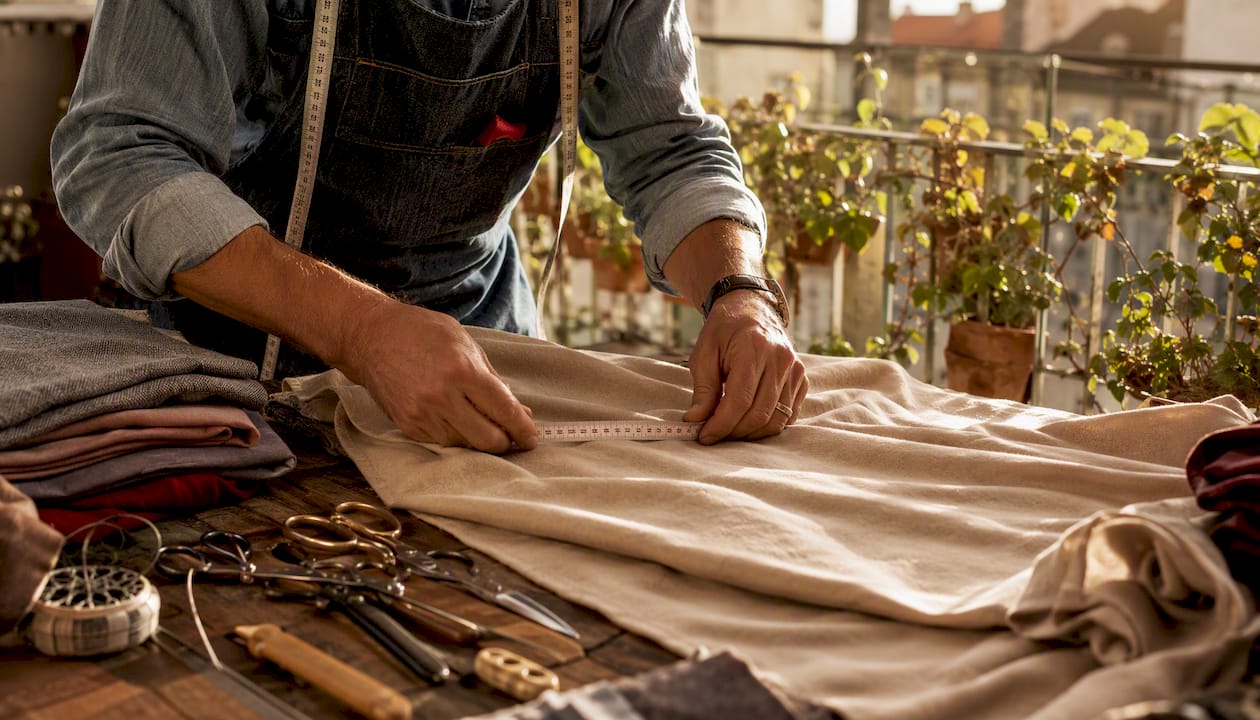
When writing retail copy, list fibre content, the mill or supplier name where available, construction highlights such as hand-stitched seams, and recommended care. Explicit fabric names and mill references lower returns and increase buyer confidence.
Pro Tip: When placing wholesale orders, ask for the mill or workshop name. A named supplier increases traceability and gives you credible copy for your product listings.

How should UK buyers approach sizing and fit?
Italian sizing and UK sizing do not align neatly, and this is where most returns originate. The fix is straightforward: always check centimetre measurements for chest, waist, hip and garment length rather than trusting a nominal size number.
- ‘One size’ or ‘one size fits most’ labels are common on Italian knitwear and casual pieces — review the stretch, cut and recommended UK size equivalents stated on the product page before ordering.
- Italian tailoring typically uses a sleeker silhouette than many UK shoppers expect; if you prefer a relaxed fit, size up or look for pieces described as oversized or easy-fit.
- For plus-size shoppers, inclusive sizing guidance can help you identify which Italian cuts work best for your shape.
- Modern Italian designers increasingly balance heritage tailoring with softer contemporary silhouettes, which has widened the fit options available across body shapes.
Pro Tip: For knitwear, ask for the gauge and fibre composition — for example, the percentage of cashmere. These details determine stretch and drape, which directly affects how the piece fits and whether it holds its shape after washing.
How can you verify a garment is genuinely Made in Italy?
Verification is a practical process, not guesswork. Work through these checks before purchasing or listing a product:
- Label and invoice: The country-of-origin label must be sewn into the garment. For wholesale orders, request supplier invoices or production certificates — these are the strongest documentary proof.
- Named materials: Confirm that the product page lists specific fibre names. Generic descriptions like “quality fabric” are a red flag; named materials like cashmere or linen are not.
- Supplier transparency: Brands that disclose workshops or family-run production histories offer stronger proof than a generic tag. Ask for mill or workshop names and, where possible, small-batch production details.
- Photographic evidence: Close-up images of seams, hems and internal finishes tell you more than a styled product shot. Consistent quality in these details is a reliable indicator.
- Customer reviews: Read reviews specifically for comments on fabric feel, construction and whether the garment matched its description. Consistent positive feedback on quality claims adds credibility.
For retailers, the trust signals to display on your own product pages are: origin labelling, clear fabric specifications, named mills or workshops, customer testimonials and a transparent returns policy.
What should UK buyers expect to pay, and how does shipping work?
Made in Italy pieces sit above high-street prices — that premium reflects superior materials and finishing, not just a label. Setting realistic expectations protects both your margins as a retailer and your satisfaction as a shopper.
- Price range: Expect to pay more than high-street equivalents; the premium is justified by fabric quality and construction longevity. Wholesale buyers should factor this into mark-up calculations from the outset.
- Shipping: Some sellers dispatch from Italy, which adds lead time. Check whether your chosen retailer ships from a UK warehouse or directly from Italy, and allow for possible seasonal production delays on wholesale orders.
- VAT and duties: For cross-border shipments, confirm at checkout who is responsible for VAT and import duties. UK buyers should check whether the price shown includes UK VAT to avoid surprises on delivery.
- Returns: Prioritise sellers with a clear returns window, free returns where possible, and responsive customer support to handle sizing queries. Lashra offers free shipping on orders over £50 and a hassle-free returns policy, which reduces the risk of ordering online.
How do UK retailers source Made in Italy clothing for resale?
Sourcing Italian-made lines for a boutique or e-commerce shop follows a clear sequence. Skipping steps — particularly the sample stage — is where most buyers make costly mistakes.
- Define your category needs. Identify whether you need knit staples, tailored trousers, seasonal linen or casual pieces, and set your target mark-up and stock-turn expectations before approaching any supplier.
- Request samples before committing to an MOQ. Handle the fabric, check the construction and try the fit. No amount of product photography replaces a physical sample.
- Confirm production terms. Ask about minimum order quantities, payment terms, lead times and whether the supplier offers bespoke labelling or branded packaging for your store.
- Get traceability documentation. Named mills, workshop addresses and supplier invoices are the strongest proof of Italian manufacture — request these before placing any order and use them in your product copy.
- Negotiate commercial terms. Agree shipping costs, the returns process for faulty items and any volume-based pricing tiers. Get these in writing before your first order.
Key takeaways
Authentic Italian-made womenswear is identifiable by named natural fibres, traceable supply chains and visible artisan construction — and UK buyers can access it confidently when they know what to check.
| Point | Details |
|---|---|
| Verify with labels and invoices | Check the sewn origin label and request supplier invoices or production certificates for wholesale orders. |
| Prioritise named natural fibres | Look for cashmere, linen, silk or specialist wools — generic fabric descriptions are a warning sign. |
| Measure in centimetres | Italian sizing differs from UK sizing; always check garment measurements, not nominal size labels. |
| Confirm shipping, VAT and returns | Know who pays duties at checkout and choose sellers with clear returns windows before ordering. |
| Shop Lashra for authenticated pieces | Lashra’s Made in Italy collection offers inclusive sizing, free shipping over £50 and hassle-free returns. |
Why we curate Made in Italy clothing at Lashra
The conversation around Italian fashion often gets pulled towards ultra-luxury houses, as though authentic Italian craftsmanship is only accessible at four-figure price points. We think that framing does a disservice to the many specialist and easy-wear producers who make genuinely Italian pieces with the same material integrity and artisan care — just without the heritage brand premium attached.
At Lashra, we curate our Made in Italy collection with that broader picture in mind. We look for pieces that combine quality construction with wearable, inclusive sizing, because we know that a beautifully made garment only delivers its value when it actually fits and flatters the person wearing it. Our product pages list fabric details and care guidance, and our customer testimonials reflect consistent feedback on quality and fit. What we will not do is hide behind vague descriptions — if a fabric is cashmere, we say so; if a piece runs slim, we say that too.
For retailers considering wholesale enquiries, we are happy to discuss sample requests and share supplier information. Transparency about provenance is not a nice extra for us — it is the foundation of how we sell.
Lashra’s Made in Italy collection is ready for you to explore
If you have been searching for Italian-made womenswear that combines genuine craftsmanship with inclusive sizing and straightforward UK shopping, Lashra is the place to start. Our collection spans tailored wet-look trousers, plain and printed joggers, Magic Pants in Italian fabrics and women’s knitwear — all with fabric details and sizing guidance on every product page.
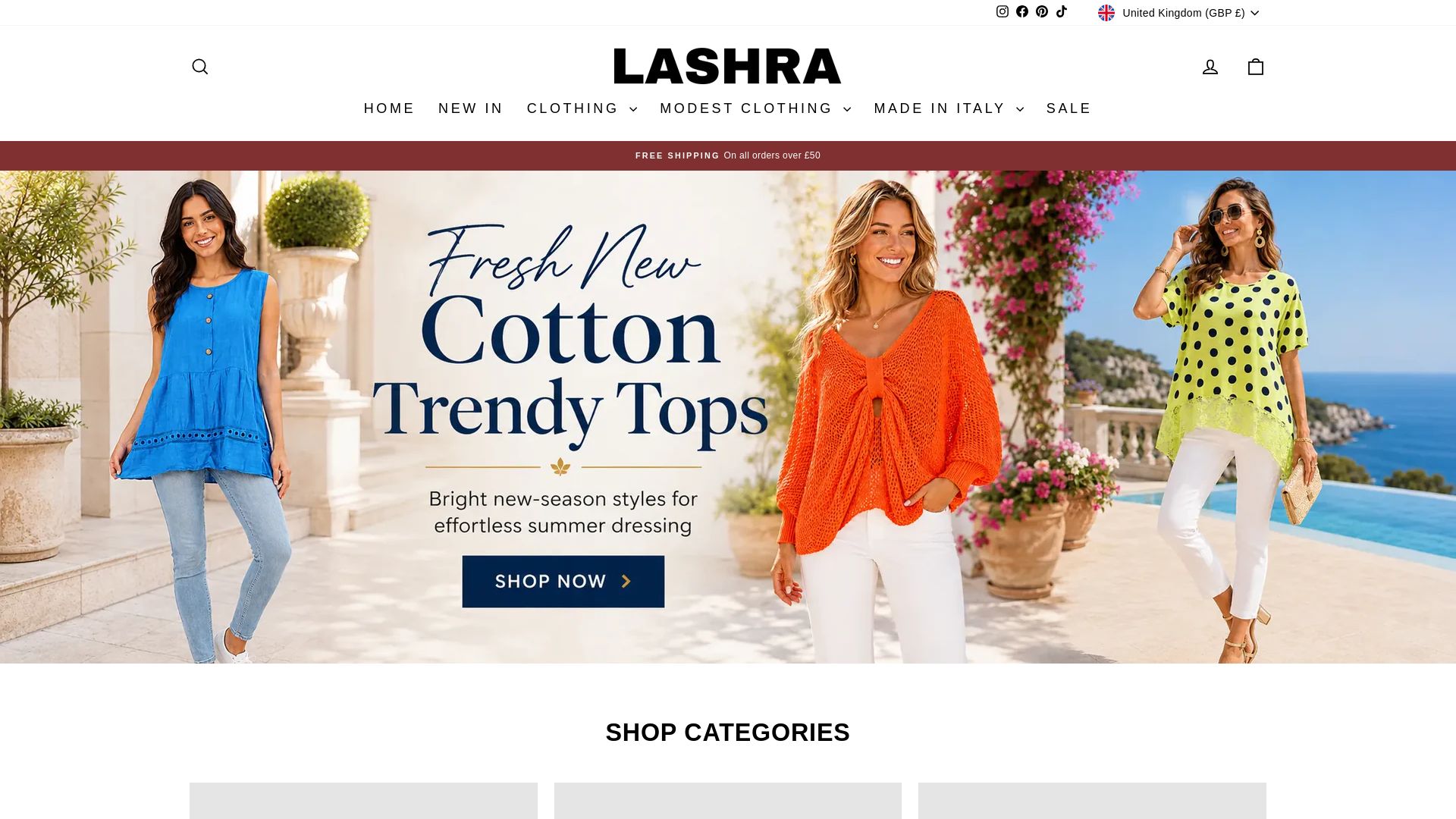
Free shipping on orders over £50 and hassle-free returns mean you can order with confidence, try the fit at home and return anything that does not work. For wholesale enquiries, contact us to request samples and discuss MOQs — we will share supplier information and production details so you can list provenance claims on your own channels with confidence. Browse the full collection at lashra.com and find the Italian-made pieces that belong in your wardrobe or your shop floor.